Background
On Wednesday 20th October 1993 I left Grimsby aboard RRS Bransfield, destination Halley Research Station, Antarctica. I had accepted a three year contract with the British Antarctic Survey (BAS) and after the initial summer of training, this was the moment of truth. I was heading for two full winter seasons at the flatest, coldest and remotest base operated by BAS. I finally returned on 18th May 1996. I didn't have the faintest idea of what I was letting myself in for, but in the end it was the most mind boggling experience of my life.
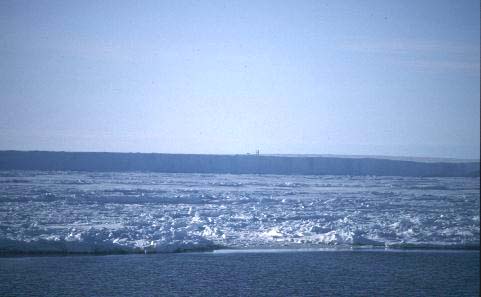
The Brunt Ice Shelf, this was taken at the nearest point to Halley in December 1993
Halley is located on the Brunt Ice Shelf, which sticks out into the Weddell Sea. It is about 15km inland from the coast because ice shelves move. The Brunt moves about 2m a day so any base built there will eventually be pushed off the end and then follow Shackleton's footsteps, drifting about the ocean. Shackleton actually sailed past the coast, known as Coate's Land, on his epic Endurance expedition. I did not realise this until many years later.

The ACB
The buildings are built on big steel legs, because the snow surface rises about 1m a year. I was at the fifth base to be built on the Brunt, the others having been long since buried & crushed by the ice. Halley III was poking out of the cliffs 25km to the north west, Halley 4 was about halfway between Halley III & V. It's unique construction made Halley V the first base whose successor was not being planned by the time it was built, and is expected to have a much longer serviceable life than it's predecessors. Each year, the legs are extended and the buildings raised up to maintain a minimum distance between the buildings and the snow surface.